
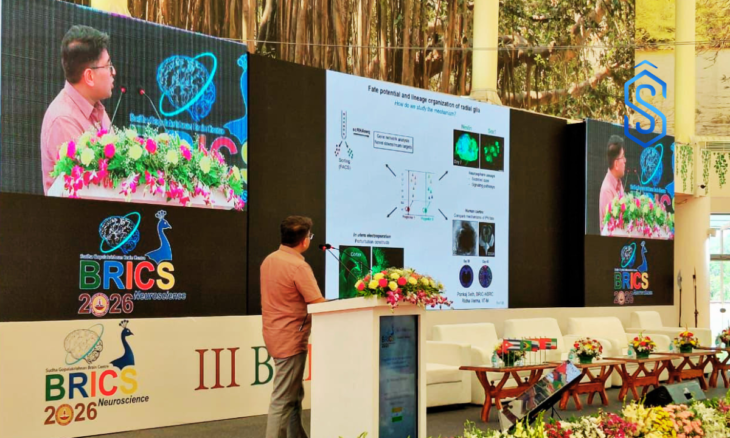
Chennai: The Indian Institute of Technology Madras (IIT Madras) hosted the BRICS Neuroscience Symposium 2026 from June 5 to 7, marking the first time the prestigious international event was held in India.
Organized by the Sudha Gopalakrishnan Brain Centre (SGBC) under the theme ‘Expanding Neuroscience: BRICS & Extended Nations’, the symposium brought together leading scientists, policymakers, researchers, and delegates from BRICS nations to advance collaboration in neuroscience and brain research.
The BRICS Neuroscience Symposium 2026 featured scientific sessions, keynote lectures, discussions on emerging neuroscience research, and a significant data release of the Human Brainstem Atlas by SGBC.
Launched in March 2022, the Sudha Gopalakrishnan Brain Centre is a cutting-edge research and development centre dedicated to human brain research with the objective of creating transformative impact in neuroscience and neurotechnologies.
The BRICS Neuroscience Symposium 2026 was attended by prominent dignitaries including Vikram Misri, Foreign Secretary of India; Prof. Ajay Kumar Sood, Principal Scientific Adviser to the Government of India; Prof. V. Kamakoti, Director, IIT Madras; Kris Gopalakrishnan, Co-founder of Infosys; and delegates representing BRICS nations.
Also Read: Clear Robotics Secures $1.75 Million Pre-Series A Funding Led by Shipsfocus Ventures
Welcoming global participants, Vikram Misri highlighted the importance of international cooperation in addressing contemporary challenges.
“We are entering a world today where the problems are multiplying faster than they ever were before. But we are also in a world where some of the solutions that we are finding are themselves creating new problems of their own.
It is in that kind of a world that the value on international collaboration and cooperation is even more. And that spirit of collaboration and cooperation of working together is precisely what BRICS symbolizes,” he said.
Addressing the gathering virtually as Chief Guest, Prof. Ajay Kumar Sood emphasized the collaborative nature of the Sudha Gopalakrishnan Brain Centre.
“An important feature of SGBC is that it has been a multi-institutional, multinational and multi-disciplinary endeavour. The Centre has become an exemplar of research and innovation through collaboration and diversified support system for long-term sustainability,” he said.
The BRICS Neuroscience Symposium 2026 also underscored the growing importance of multidisciplinary approaches in neuroscience research.
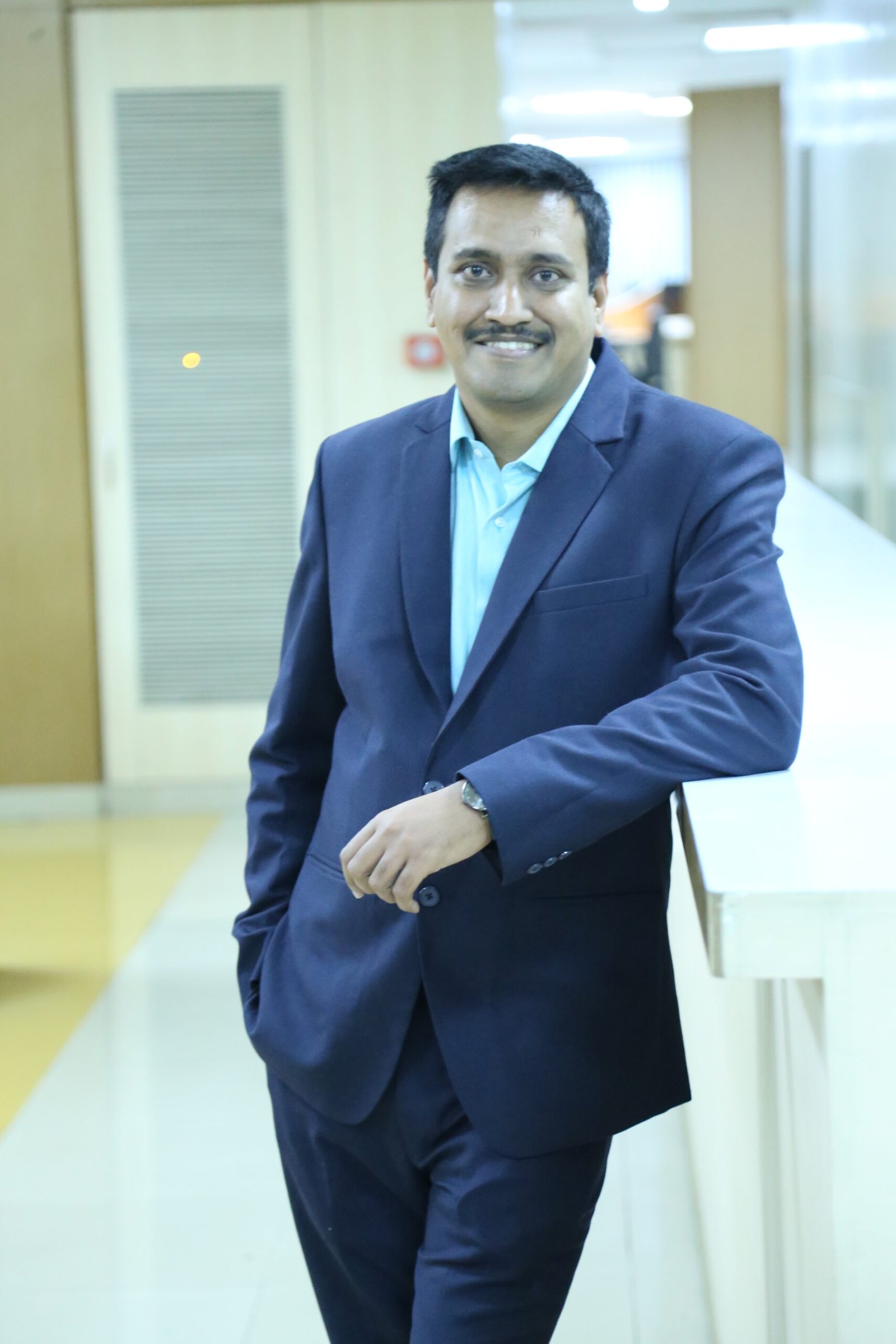
Speaking on the complexity of the field, Prof. Mohanasankar Sivaprakasam, Head of SGBC, said, “In a highly complex field like neuroscience, multi-national and multi-disciplinary teams are key to solve hard problems and create breakthroughs.”
During the BRICS Neuroscience Symposium 2026, participants were introduced to the capabilities of SGBC, which has developed and operates a world-class high-throughput multimodal whole-brain imaging pipeline capable of mapping human brains at cell resolution.
A key highlight of the event was the release of the Human Brainstem Atlas, reflecting SGBC’s commitment to advancing neuroscience research through data-driven scientific discovery and international cooperation.
The BRICS Neuroscience Symposium 2026 concluded with strengthened scientific partnerships among participating nations and reinforced efforts toward advancing global neuroscience initiatives through collaborative research, innovation, and knowledge exchange.